
5 lessons from the world's largest Out of Home Congress

London showcased an industry with growing confidence in its future, but also a clear understanding of what comes next. Digitisation and expansion remain important, but the conversation has evolved. Instead, they focused on the capabilities required to make out of home (OOH) more accountable, more accessible and more valuable to advertisers.
The President of the World Out of Home Organisation (WOO), Tom Goddard, framed the opportunity in clear terms. Global OOH revenues have reached $54bn, up 15% on the prior year. Digital now represents 47% of the medium and is on the point of overtaking static for the first time in the industry's history. Growth is outpacing the wider advertising market in several regions, led by Asia Pacific at close to 30%.
Yet Goddard was deliberate in refusing to let those numbers stand as the headline. He set four priorities for the industry and named proving effectiveness as the most urgent of them. His argument was one every media owner in the room understood: deliver the data and the evidence advertisers now demand, and OOH will not simply grow with the market but consistently take a larger share of it. Revenue growth and share growth are different objectives, and the gap between them is where the next decade will be decided.

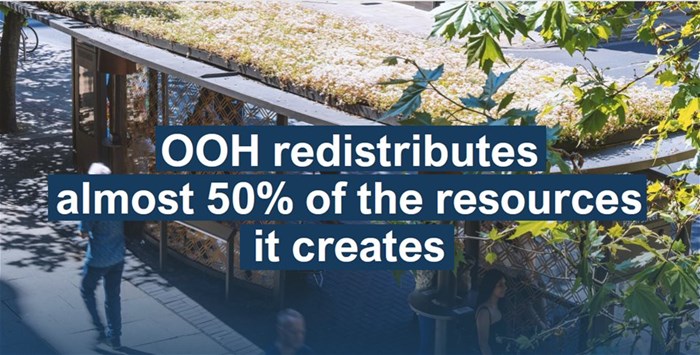
The keynotes gave that argument its edges. Jean-François Decaux made a case the industry too often leaves unspoken: OOH funds public transport, civic infrastructure and shared public space, and it does so in full view of the people it serves. “We are a force for good,” he told the room, “not a scam or an addiction, but we need to be heard.” It was at once a defence of the medium’s social licence and a challenge to an industry that has been reluctant to claim it. He paired it with a commercial point. Audiences spend a substantial share of their waking hours in environments where OOH is present, yet the medium captures only a fraction of total advertising investment. In the markets that have built the measurement and trading infrastructure to compete, OOH already commands double-digit share. The headroom is not theoretical.
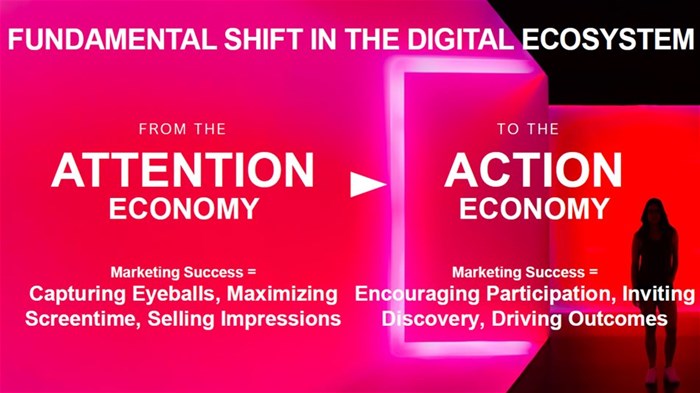
Nick Brien of OUTFRONT framed the same opportunity as “In Real Life”. As audiences shift from merely paying attention to taking action, advertising anchored in the physical world is structurally advantaged on reach, influence and, increasingly, trust. His argument landed at precisely the moment confidence in digital and social environments is being tested by fraud, opacity and synthetic content. Sean Reilly of Lamar kept the room honest, reminding it that the most effective OOH still begins with a powerful idea rather than a sophisticated piece of technology. Across these sessions, two demands from the buy side recurred without exception: a single, comparable measurement currency, and trading as frictionless as the digital platforms OOH competes against.
Measurement sat at the centre of the Congress. The question is no longer whether OOH works, but whether its contribution can be demonstrated using the same standards applied to every other channel. Advertisers increasingly expect evidence, not assertions, and OOH is responding by improving audience measurement, attribution and accountability.
The launch of the WOO Global OOH Audience Measurement Guidelines 2.0, developed with input from measurement bodies around the world, reflected the industry's commitment to greater consistency and comparability. Retail media is accelerating the same trend. As OOH moves closer to the point of purchase, exposure can increasingly be linked to action, helping demonstrate business outcomes rather than simply audience delivery. For an industry seeking a larger role within modern media plans, proof is becoming as important as reach.
Creativity held its ground. Tim Bleakley’s Make Outdoor Creative Again was a deliberate provocation: weak creative erodes effectiveness, depresses returns and ultimately discourages the very investment the medium is fighting to attract, while strong creative builds memory and commercial impact in ways no amount of targeting can replicate. As digital inventory multiplies and screens proliferate, the differentiator is not the screen but the idea on it. That is a discipline the industry will have to protect rather than assume.
Technology ran underneath almost every session. Artificial intelligence, programmatic trading, automation and audience aggregation are increasingly embedded within how campaigns are planned, bought and optimised. WOO and PwC's first independently aggregated measure of programmatic DOOH highlighted the growing role these capabilities are playing in the evolution of the channel. The message from London was simple: technology should remove friction, not add it. The operators that succeed will not necessarily be those with the most technology, but those that use it most effectively to simplify planning, buying and measurement. In doing so, they make OOH easier to integrate into omnichannel strategies and compete for a greater share of advertising investment.
The Congress reinforced an important reality: many of the challenges facing OOH cannot be solved competitively. Regulation, audience measurement, industry research, buyer-side friction and competition for advertising investment affect every market. The strongest OOH markets in the world are supported by strong industry bodies, shared research, collective advocacy and common standards.
That principle was reinforced by the launch of WOO's regulation and policy initiative, a global programme designed to help the industry respond to increasing regulatory restrictions through shared intelligence, best-practice resources, policy monitoring and coordinated advocacy. It reflects a growing recognition that some of the industry's most important battles are collective rather than commercial.
The same principle is increasingly evident in sustainability. The launch of the Ad Net Zero OOH carbon calculator reflected a shift from aspiration to accountability. Sustainability is becoming an expectation rather than a differentiator, and the ability to measure and reduce environmental impact is becoming part of the industry's credibility.
What these lessons mean for South Africa
South Africa has among the most mobile audiences in the world, dense and fast-growing retail environments, extensive public transport networks and concentrated urban centres. Few media channels can accompany South Africans across as many real-world moments in a single day. The audience advantage is real and structural. The opportunity lies in converting that advantage into greater advertiser confidence, investment and relevance within media plans.
- The prize is a larger role within modern media plans. A larger OOH number next year is the easy ambition. The harder and more valuable one is securing a greater share of advertising investment by proving OOH's effectiveness alongside every other channel. That case cannot be made on inventory or reach alone. It will be made on measurement, accountability and a credible, comparable local currency.
- Trust and real-world presence are our sharpest edge. In a market increasingly shaped by digital complexity, OOH's visibility, transparency and public presence remain powerful differentiators. South Africa should be more deliberate in communicating the value of trusted, brand-safe environments and the contribution the medium makes to the communities and infrastructure it serves.
- Creativity is the multiplier, not the decoration. As digital inventory expands, the opportunity is not simply to increase the number of screens, but to increase the effectiveness of the medium. Raising the creative standard of OOH remains one of the fastest ways to improve outcomes for advertisers and strengthen the case for greater investment.
- Frictionless, intelligent trading is now the price of entry. When a campaign can launch on a competing platform in minutes while an OOH booking takes days, budget follows the path of least resistance. Programmatic capability, automation, audience aggregation and verified audience data are helping close that gap, making OOH easier to integrate into omnichannel planning and buying frameworks.
- We win this as a sector or not at all. Common measurement standards, shared research, coordinated regulatory engagement and collective industry advocacy are industry responsibilities by definition. No single operator can deliver them alone. The future growth of South African OOH depends as much on collaboration as competition.
The lasting message from London is that the future of OOH will not be determined by how many screens we build or how many impressions we report. It will be determined by our ability to combine the trust and impact of the real world with the accountability, accessibility and intelligence advertisers expect.
South Africa has the audiences, the infrastructure and the talent to be one of the markets that gets this right. What remains is the discipline to build the proof, and the willingness to build it together.
About the author
- 5 lessons from the world's largest Out of Home Congress 1 Jul 2026
- Scaling community presence: How Field Force brought a national brand strategy to life 18 Jun 2026
- Outdoor Network captures commuters with a new digital billboard 28 May 2026
- Designing for seconds 25 May 2026
- Measurable environmental and governance systems for POP Warehouse 14 May 2026
 | ProvantageProvantage is one of the largest and most innovative end-to-end integrated marketing solutions and media businesses in Africa, extended over multiple key consumer touchpoints and covering a range of environments and audience segments. |