 |
Spain won the World Cup. But who won the battle for brand relevanceThe Fifa World Cup is over. Spain have deservedly lifted the trophy, adding another chapter to Adidas' rich footballing heritage. But while the players decided the outcome on the pitch, another contest unfolded away from the stadiums: the battle for brand relevance. 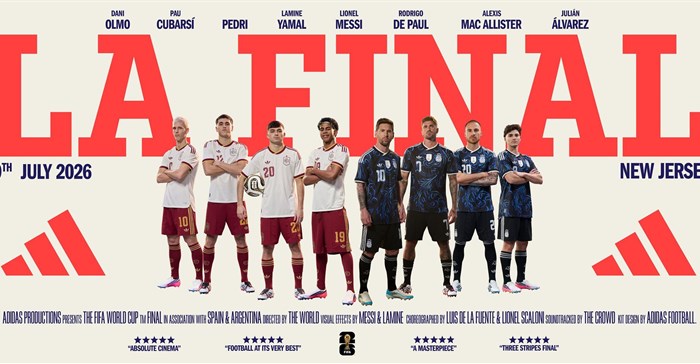 The World Cup is over. Spain won the trophy. But Adidas may have won the marketing battle, says marketing strategist, Matthew Nkala (Image supplied) When the Fifa World Cup kicked off, I wrote about what I believed were two fundamentally different approaches to sports marketing. Nike appeared to use the tournament as the backdrop for a broader cultural story. Its creative celebrated the occasion - the spectacle, the emotion and the global community that gathers around football. Adidas chose a different route. Its campaign wasn't really about the World Cup. It was about football. That distinction felt important then. It feels even more significant now that the tournament has concluded. Two different definitions of successThe question isn't simply which campaign generated the most impressions. It's which brand felt most synonymous with the tournament. One of the challenges with judging marketing is that we often look for a single winner. The reality is more nuanced. Nike and Adidas weren't trying to win the same game. Nike built a campaign around culture. Adidas built a campaign around football. Neither approach is inherently right or wrong. They simply optimise for different outcomes. What the numbers actually sayThe data tells a fascinating story because it doesn't hand Adidas a clean victory - it reveals that each brand excelled in different ways. Industry analysis from Meltwater and Sprout Social also placed Nike ahead on total campaign impressions - approximately 3.64 billion compared with Adidas' 3.43 billion - as well as overall social conversation. If reach was the objective, Nike succeeded. But engagement tells a different story. On Instagram, Nike's flagship campaign generated approximately 58.7 million views and 2.4 million likes, a like-to-view ratio of around 4%. Adidas' hero campaign attracted a much smaller audience of around 7 million views, yet generated 2.56 million likes, producing an engagement rate of more than 36%. Meltwater concluded that while Nike dominated overall visibility, Adidas outperformed on engagement efficiency. Independent creative testing from System1 reached a similar conclusion, rating Adidas' campaign significantly above category norms for attention, emotional response and long-term brand recall. The numbers suggest something marketers often forget. Scale and resonance are not the same thing. Nike maximised reach. Adidas maximised engagement. Both are valuable. But they represent different strategic objectives. The view from my couchStatistics only tell part of the story. Watching from South Africa, my experience of the tournament was very different from what the global dashboards might suggest. Adidas owned the television environment. Their creative was everywhere. The opening film featuring Jude Bellingham and football's biggest stars became the recurring narrative that accompanied the tournament from the opening whistle to the final. By contrast, I struggled to remember seeing a Nike television commercial during live match broadcasts. That doesn't invalidate Nike's global success. It highlights an important truth about modern marketing: audience experience is often local. A campaign can dominate globally while another dominates within specific markets and media environments. As a viewer (a Nike and football fan if I have to be more honest), not a social listening platform, the World Cup simply felt like an Adidas tournament. That perception matters. Because brands aren't built solely through dashboards. They're built through memory.  Football remained the heroPerhaps the biggest lesson wasn't about media buying or creative production values. Too often, brands approach major sporting events asking how they can become the story. Adidas appeared to ask a different question. How do we celebrate the thing people already love? Every execution felt rooted in football itself. The players. The rivalries. The joy. The culture. The brand didn't try to compete with football. It amplified football. Ironically, that may be exactly why the brand became so memorable. The verdictStart with the most literal measure of who "won" this World Cup, brand-wise. Sunday's final was Spain against Argentina - Adidas's two flagship federations, going head-to-head for the trophy. The third-place play-off belonged to France and England, both Nike. It isn't a close contest: the two Nike teams that went deepest into the tournament played for bronze, while Adidas has both finalists. That's not entirely down to marketing, obviously - Adidas doesn't decide who wins penalty shoot-outs. But it isn't irrelevant either. Adidas kits 14 competing federations at this World Cup to Nike's 12, and it holds the Fifa match-ball contract into the bargain. When your roster is that deep, at least some years the draw breaks your way at the top. This year, the draw and the marketing lined up in the same direction for Adidas. If success is measured purely by reach, Nike had an outstanding tournament. If success is measured by engagement, creative effectiveness and brand recall, Adidas has a compelling case for victory. But perhaps the most interesting lesson lies somewhere in between. The strongest sponsorship marketing doesn't try to overshadow the event. It understands why people showed up in the first place. Spain may have lifted the trophy.But Adidas understood something deeper. At the biggest football tournament in the world, football didn't need a bigger story. It simply needed a brand willing to put the game first. About Matthew NkalaMatthew Nkala is a digital marketing strategist and brand storyteller based in Johannesburg and a digital director at The Catalyst Africa. With over 15 years of experience working with global brands like Microsoft, Cisco, Intel, HP, and Nike, he’s built a career around understanding what makes people tick View my profile and articles... |