






Top stories


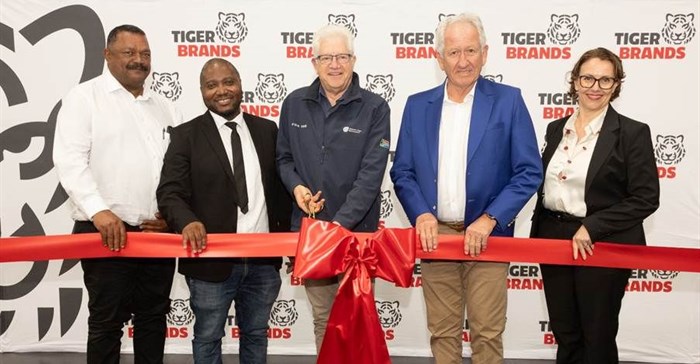
The more than R200m investment has converted the Western Cape facility, which dates back to 1903, into a modern manufacturing hub comprising three dedicated production plants.
It is the first of Tiger Brands’ structural investments to come online as part of its broader strategy to strengthen its manufacturing network and support future growth.
At the heart of the investment is a clear localisation strategy: increasing the amount of production and supply capability that Tiger Brands controls within its own manufacturing network.
The new Paarl site includes a dedicated vinegar production plant capable of producing three million litres annually.
Vinegar is a key input for several of Tiger Brands’ major products, including Mrs Ball’s Chutney, All Gold Tomato Sauce and Crosse & Blackwell Mayonnaise.
By producing more vinegar internally, Tiger Brands aims to reduce its reliance on external suppliers while improving supply continuity and strengthening its ability to respond to demand.
For consumers, the investment is ultimately about maintaining the availability and affordability of familiar household brands.
“Investments such as the Paarl mega-site are about building a stronger Tiger Brands for the future,” says Tjaart Kruger, CEO of Tiger Brands.
“By modernising our manufacturing network and improving how we operate, we are creating a more efficient, resilient and competitive business that is better positioned for long-term growth.”
A major component of the Paarl transformation is the relocation of Mrs Ball’s Chutney production to the facility.
Previously manufactured by a third party, production of the iconic South African condiment is now taking place under the Tiger Brands umbrella for the first time.
Three production lines have been installed to manufacture a range of pack formats, including 470g glass, 375g, 800g and 1.1kg PET packs, alongside 3kg and 6.25kg bulk formats.
The move gives Tiger Brands greater control over production, quality assurance and supply security while bringing one of its most recognisable brands deeper into its local manufacturing network.
For a business facing rising input costs, supply-chain uncertainty and increasingly value-conscious consumers, that control is becoming strategically important.
The Paarl site is also introducing a packaging change that Tiger Brands says is a first for South Africa’s jam category.
Jam packaging is transitioning from cans to recyclable PET containers, with new production lines capable of manufacturing 290g, 480g and 900g packs, as well as future pack sizes.
The company says the lighter PET format offers convenience while maintaining product integrity and taste.
“The transformation of our Paarl facility reflects our efforts to invest in manufacturing capability that enable us to better serve our consumers,” says Dumo Mfini, MD Culinary at Tiger Brands.
“By bringing Mrs Ball's in-house, by securing our vinegar supply, and by improving our packaging, we are focused on driving growth and better meeting consumer needs with convenient packaging solutions.”
The Paarl investment comes at a time when localisation is increasingly central to South Africa’s manufacturing and economic development agenda.
For Tiger Brands, localisation is not simply about moving production closer to consumers. The company is using its capital investment programme to strengthen its supply chain, improve manufacturing efficiency and support local suppliers.
Raw materials for the Paarl operation are sourced from qualified South African suppliers, creating links between the manufacturing facility, local agriculture and the wider regional economy.
The investment is also expected to reinforce the Western Cape’s position as an important manufacturing base, with the facility contributing through employment and economic activity.
Western Cape Premier Alan Winde, who attended the ribbon-cutting ceremony, described the investment as a vote of confidence in the province’s growth and job-creation ecosystem.
“The ongoing investment from Tiger Brands into the Western Cape is an enduring vote of confidence in our province's growth and job creation ecosystem,” says Winde.
Paarl is only one part of Tiger Brands’ wider manufacturing transformation.
Following its interim results in June 2026, the company outlined plans to invest approximately R1.5bn annually in capital expenditure over the next three years, with peak investment expected to reach R2bn.
Among the projects underway is a R1bn super bakery in Pretoria, scheduled for commissioning in 2027, while a Mega Distribution Centre in Gauteng is expected to become operational in 2028.
Tiger Brands is also consolidating its Snacks and Treats production in eThekwini, Durban, into a single mega-site, with completion expected later this year.
Elsewhere, the company has upgraded its Pietermaritzburg Mill for the first time in 33 years, with the project aimed at improving manufacturing efficiency, increasing flour extraction and reducing waste.
At its Boksburg Culinary facility, which produces brands including KOO, All Gold and Crosse & Blackwell, Tiger Brands has added a new Culinary Hub designed to bring commercial and operational teams closer together and accelerate product development.
The Paarl project illustrates how large-scale food manufacturers are increasingly viewing local production as both an economic and commercial imperative.
For Tiger Brands, controlling more of the manufacturing process can help reduce exposure to external supply disruptions while improving operational efficiency and giving the company greater control over the production of its established brands.
It also positions local manufacturing as a potential lever for affordability at a time when South African consumers remain under pressure.
The company’s investment in Paarl therefore goes beyond the modernisation of a single historic factory. It represents a broader attempt to build a more integrated, locally anchored manufacturing network around some of South Africa’s most familiar food brands.
With further investments in bakeries, mills, distribution and manufacturing sites expected to come online over the next several years, Tiger Brands is betting that a stronger local production base will be central to keeping its brands competitive — and available — in the years ahead.
