





Top stories

ESG & SustainabilityCape Town Stadium urine-recycling innovator selected for 2026 Africa Prize
29 Sep 2026


Marketing & MediaWhatsApp support is getting more expensive, but not for everyone
Wilene van Greunen, Everlytic 30 Sep 2026
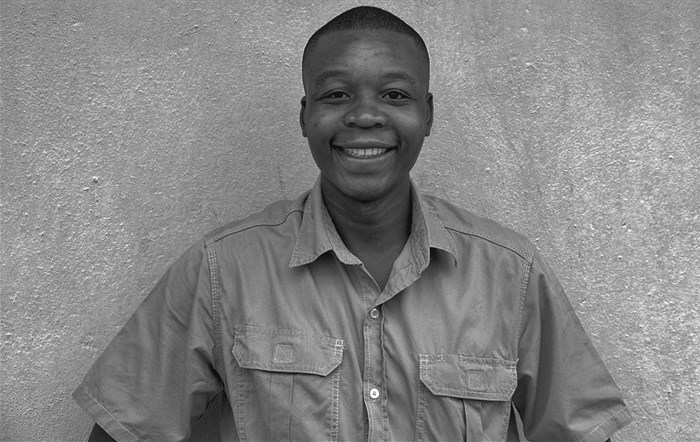
Tsundzukani Hlungwane, tracking head instructor at EcoTraining, understands that firsthand. Raised in a community bordering the Kruger National Park and the Sabi Sands, he has turned a childhood dream into a career in conservation while helping others discover opportunities in the natural world.
As part of Bizcommunity's #YouthMonth feature, Hlungwane reflects on his journey, the importance of purpose and mentorship, and why investing in young people is essential to protecting both communities and wildlife.
I come from a rural community on the outskirts of the Kruger National Park and the Sabi Sands, where nature, wildlife, and storytelling have always been part of everyday life.
I grew up in a family with a deep-rooted connection to wildlife and the wilderness, and this shaped how I see both conservation and people. My grandfather, Kimbian Mnisi, was one of the early trackers of Londolozi and became a tracking instructor at EcoTraining about 30 years ago.
Two generations later, I work as a Tracking Head Instructor at EcoTraining, where I teach and mentor trackers and field guides. My role allows me to share knowledge of tracking, ecology, animal behaviour, and wilderness ethics while helping others build meaningful careers in conservation.
I’m involved with a non-profit focused on uplifting people and protecting wildlife in the communities surrounding the Kruger National Park and the Sabi Sands. EcoTraining remains the platform through which most of my work happens and where I teach and mentor the next generation of trackers and field guides.
At the centre of everything I do is one belief: if we want to protect wildlife, we must also invest in people.
My journey into conservation, community development, and entrepreneurship is deeply personal.
Growing up, I struggled socially and often found it difficult to fit in. I was naturally quiet, kept to myself, and my world revolved around a small space – from home to school – with my brother as my closest friend, my family deeply connected to wildlife and the bush, and my mother as my source of comfort.
I still remember a moment in primary school when a teacher asked us what we wanted to become. Many children wanted to be doctors, lawyers, or pilots. When it was my turn, I proudly said I wanted to become a tracker because that was the world I knew through my family background and surroundings.
Before I could even finish speaking, the class laughed at me. It hurt deeply and affected my confidence. I went home upset and told my mother what had happened. She comforted me and told me that next time I should say I wanted to be a teacher.
From that day, I quietly shifted from wanting to become a tracker to wanting to become a teacher. After matric, I enrolled at university intending to become a science teacher, but within a week, I realised I was following a path that did not feel true to who I was.
I returned home, spoke honestly with my parents and told them I was meant to be a teacher, just in a different way.
I applied to the Tracker Academy and was fortunate enough to be accepted. That journey changed my life. After graduating, I realised something powerful: I had become exactly what my mother had encouraged me to be – a teacher – not of mathematics or science, but of tracking, wilderness, and conservation.
EcoTraining is my home; this is where we impact the future guides and trackers, and inspire a generation towards environmental consciousness and sustainability.
As I grew in my conservation career, I reflected on my own childhood and the realities many children in communities surrounding conservation areas face.
Like many children growing up near wilderness areas, I participated in harmful activities without understanding the consequences. What often starts small can quickly grow into something much bigger, especially in vulnerable communities where poaching networks target young people.
That reality shaped my purpose.
I believe my journey has been shaped by a combination of milestones rather than one single moment.
Graduating from Tracker Academy was life-changing because it allowed me to pursue the dream I once felt embarrassed to speak about as a child. Becoming a Tracking Instructor and eventually Tracking Head Instructor at EcoTraining was another important milestone, because it allowed me to grow into the role of a teacher in conservation.
Establishing ORCD (Our Responsibility Community Development) has also been deeply meaningful because it transformed personal experiences and lessons into community action.
Introducing EcoTraining’s Junior Ranger Programme has been another proud moment. EcoTraining sponsors these courses at no cost to Our Responsibility Community Development, allowing us to bring conservation education and career pathways to young people who may never have imagined them possible, and to inspire the next generation of guides and guardians of the wild.
Young people can now access conservation learning, business opportunities, education and skills development from almost anywhere. Programmes such as online conservation education, digital mentorship and entrepreneurship are helping young people explore possibilities that may not have been available before.
At the same time, many young people in rural communities still face barriers linked to poverty, access, and exposure. This is why mentorship and practical opportunities remain so important. I believe one of the biggest opportunities today is that young people are increasingly able to shape their own future rather than wait for opportunities to find them.
I believe it’s the combination of unemployment, lack of exposure, and hopelessness.
Many young people are talented and capable, but they do not always have access to mentorship or support systems that help them see what is possible for their future.
In rural communities, especially those bordering conservation areas such as the Kruger National Park and the Sabi Sands, the challenge can become even more serious. Vulnerable children are often exposed to crime, substance abuse and sometimes poaching as part of everyday life. When a young person sees few opportunities around them, negative influences can easily become normal.
I have learned to navigate obstacles through patience, consistency, and purpose. Purpose carries you through difficult seasons. I often remind myself that meaningful change takes time, and sometimes progress starts with simply remaining committed.
Don’t wait for perfect conditions to begin.
Start where you are, with what you have, and allow yourself to grow. Be willing to volunteer, ask questions, learn continuously, and stay humble.
Also, never underestimate your background. Sometimes, the very struggles and experiences you come from become the reason you can create solutions for others.
Your journey may not look like everyone else’s, and that is okay. Stay consistent, remain teachable, and trust your purpose.
Young people do not only need encouragement. They need access to skills development, career exposure, technology, mentorship, and environments that allow them to grow.
I believe South Africa already has talented young people. What many are missing is access, guidance, and opportunity.
If we invest in young people early enough, especially vulnerable children, we cannot only change individual lives. We strengthen communities and protect the future of our country.
