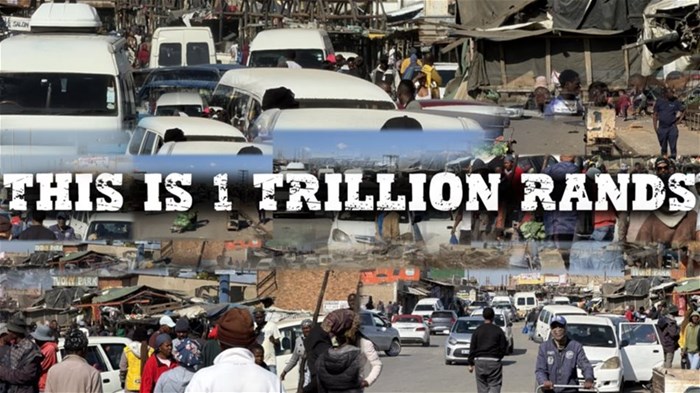
Every quarter, somewhere in Sandton, a familiar ritual takes place. A marketing team walks into a boardroom armed with caffeine, confidence, and a deck so polished it could reflect poor judgement back at them. The plan is always dressed up nicely- buyer personas, programmatic media, predictive models, and stock photos of smiling township residents who have clearly never seen the campaign they are being used to justify.
Then the campaign goes live. The ads fire. The dashboard glows green. TikTok impressions do their little dance. Brand awareness behaves. Clicks arrive on time like obedient interns.
Six months later, sales are still sitting in the corner, untouched and unimpressed.
That is the ultimate South African corporate tragedy, "the expensive marketing joke". Brands keep spending millions measuring The What while ignoring The Why. They treat a living, breathing economy as a segmentation model to be optimised, then act surprised when the market refuses to behave like a PowerPoint shape.
They win the retweets, collect the vanity metrics, get accidental product placement, and still miss the money. Congratulations: the campaign was loud, pretty, and commercially useless.
The comfort trap of “The What” — Where strategy goes to hide
“The What” is corporate comfort food. It is measurable, auditable, and easy to feed to regional headquarters without anyone choking on context.
It is the landmark Billboard near Chris Hani Baragwanath Hospital, the translated headline with “Vilakazi Street” thrown in somewhere there, that one taxi-rank activation, the high-reach media buy, and the comforting illusion that visibility is the same as relevance. It is not. At best, it gets you noticed. At worst, it gets you ignored loudly.
When brands chase “The What” without context, they develop a very expensive form of blindness. They see segments, not people. They see impressions, not intention. They see traffic, not trust.
“The Why” Is where eeak strategies get exposed
If “The What” gets your brand noticed, “The Why” decides whether anyone cares. It is the emotional, cultural, and economic logic behind how the majority market decides, spends, saves, shares, recommends, forgives, and rejects.
- Stokvels: Global models may reduce them to “micro-savings groups.” In reality, they are trust-based financial systems built on social accountability, collective resilience, and protection against inflation.
- Brand choice: A purchase is not only a price decision. It is a calculated investment of limited household
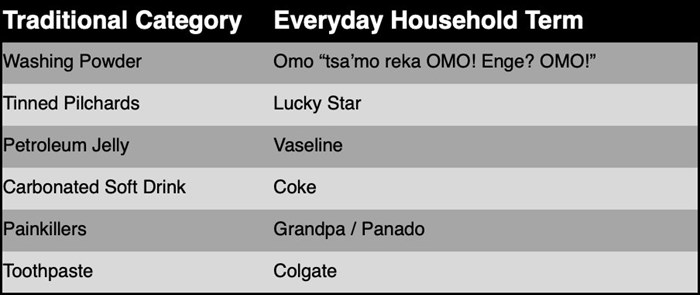
"When a brand understands “The Why,” it can move from product status to cultural fixture. That is when a brand becomes household language."Table 1. Generic name status — Brands that earned cultural fixture status in the township household lexicon.
Source: Kabelo Kale — Views from The Townships.
These legacy brands did not become household shorthand through tokenism, cute slogans, or global campaigns dressed in local lipstick. They earned that place the difficult way: through consistency, availability, trust, and respect for the consumer’s budget and dignity. The uncomfortable truth is that very few, if any, brands have achieved that kind of generic-name status in the past 30 years.
A few boardroom delusions that burn real money - and trust me, there are more!
This is where strategy puts on a blazer, clears its throat, and starts lying with confidence. Smart people, clean data, global playbooks — and still, somehow, ideas that collapse the moment they meet a real shopper with real constraints.
1. The bulk-buying illusion
- The corporate fantasy: People buy large economy packs because they love discounts, have endless cupboard space, and plan household budgets like CFOs with grocery trolleys.
- The human reality: Bulk buying is often collective survival: a stokvel, an extended family pooling resources, or a household protecting itself against inflation, transport costs, and month-end uncertainty. The “consumer” in your model is often an entirenetwork. Your spreadsheet just failed to invite the aunties.
2. The premium spender paradox
- The corporate fantasy: Township consumers buying premium cars, luxury apparel, or status smartphones are reckless, irrational, or hypnotised by Western luxury culture.
- The human reality: When traditional wealth milestones are slow, blocked, or brutally expensive, visible quality becomes social capital. A premium purchase can signal dignity, credibility, ambition, and movement. Sometimes strategy wears good shoes — and sometimes the boardroom is too busy judging the shoes to read the strategy.
3. The digital leapfrog myth
- The corporate fantasy: High smartphone penetration means the market is ready for digital-only banking, AI chatbots, cashless e-commerce, and a frictionless future designed by people who have never run out of data before payday.
- The human reality: Digital usage is often defensive, not seamless. Data is expensive. WhatsApp works because it is familiar,predictable, and often zero-rated. Cash still matters because it gives immediate liquidity, avoids hidden fees, and lets households see exactly where every rand goes. Not everything broken needs an app. Sometimes the app is the problem.
4. The B-brand affordability fallacy
- The corporate fantasy: When money is tight, people will automatically switch to our cheaper B-brand. Simple. Elegant. Wrong.
- The Human Reality: Poverty is expensive, and mistakes are not cute when the budget is already bleeding. A failed product can wreck a tight household plan. Trusted brands often win because they feel like insurance against disappointment.
5. The energy drink myth
The corporate fantasy: Energy drink sales are booming because township consumers are chasing elite performance, gym culture, and the global wellness aesthetic. Sure. And the taxi driver is training for a sponsored triathlon between routes.
The human reality: Energy drinks are often endurance fuel, not fitness signalling. And yes, there are other reasons too — If you know you know, let’s just say score scored on this one! For commuters, taxi drivers, security guards, cleaners, and manual workers, they offer cheap, portable energy for long days where sitting down for a proper meal is a luxury the schedule did not approve.6. The corporate sachet saviour complex
- The corporate fantasy: Let us copy the global sachet playbook and sell tiny packs to “unlock access.” Nothing says inclusion like charging more per millilitre.
- The human reality: Township consumers understand the poverty premium very well. Tiny sachets often cost more per millilitre than larger packs. Unless a sachet solves an immediate cash-flow problem, consumers may choose mid-tier house brands, bulk sharing, or communal buying. Access that quietly overcharges people is not innovation; it is math with bad manners.
7. The kasi-cool vernacular trap
- The corporate fantasy: Authenticity means grabbing slang from a trending TikTok, sending it through legal, and pretending the final sentence still has a pulse.
- The human reality: Street language changes fast and varies by place. By the time compliance has gently strangled the copy, the phrase is already stale. Consumers can smell pandering through the screen. Respect beats synthetic slang every time.
8. The boots-on-the-ground Sandton safari
- The corporate fantasy: Our executives did a one-day township immersion tour, so now we understand the market. There was a mural, a spaza visit, and lunch. Anthropology complete.
- The human reality: A curated township tour is not immersion; it is tourism with a research budget. Tinted SUVs, pre-briefed spaza owners, mural selfies, and a safe restaurant stop will not reveal the anxiety, logistics, negotiation, and improvisation that shape real commerce.
9. The always-on omnichannel delusion
- The corporate fantasy: Consumers are active on mobile, so let us build a heavy digital funnel with high-resolution video, banners, landing pages, and enough tracking pixels to qualify as surveillance cosplay.
- The human reality: A data-heavy funnel can feel like an economic penalty. Someone counting every megabyte is not admiring your unskippable video; they are watching their bundle vanish. That builds irritation, not brand love.
10. The CSR good corporate citizen hall pass
- The corporate fantasy: Donate a painted shipping container, add a ribbon-cutting photo, post it on LinkedIn, and wait for generational loyalty to arrive with the catering.
- The human reality: Communities know when CSR is just a branded billboard — especially in places like Soweto and Tembisa. If your product is overpriced, your distribution excludes local traders, and your strategy has the empathy of a parking ticket, a painted container will not rescue the quarter.
11. The taxi-rank activation overdose
- The corporate fantasy: Let us blast music at the taxi rank on Friday afternoon, hand out flyers, and call commuter irritation “engagement.”
- The human reality: A Friday afternoon taxi rank is not a brand playground. It is a high-pressure logistics system full of tired people counting fares, watching routes, guarding bags, and trying to get home. Your promoter is not a touchpoint; they are traffic.
12. The podcast bandwagon
- The corporate fantasy: Podcasting is booming, so let us sponsor a glossy studio show and pretend a 60-minute HD Vodcast is “mass market” because someone’s niece said podcasts are hot.
- The human reality: Podcast growth does not cancel data costs. Many consumers rely on workplace Wi-Fi or compressed clips shared on WhatsApp. A glossy HD vodcast may look premium in the agency case study while speaking mainly to a suburban bubble and missing the street entirely.
Where the algorithm runs out of road and starts guessing
Algorithms are brilliant at spotting patterns. They are less brilliant at understanding why cash feels safer than an app, why a grandmother will not switch washing powder, or why a cheap product can still feel financially dangerous. The model can tell you what moved. It cannot tell you what people are protecting.
- The linear-journey fallacy: Automated funnels assume people glide from awareness to purchase like obedient little dots in a presentation. Real buying journeys are social, messy, negotiated, payday-sensitive, route-dependent, and heavily shaped by who has already tried the product and survived the experience.
- The invisible informal economy: Formal analytics track card payments, banking logs, credit records, and retail scans. They miss cash moving through spaza shops, wholesalers, salons, local logistics, and buying pools. If there is no digital footprint, the model quietly pretends the money does not exist. Convenient. Also wrong.
- Contextual blindness: A model may label a local purchase spike as individual demand. On the ground, it may be a stokvel pooling money before prices rise, or households reorganising budgets before school-fees month. The data is not wrong; it is just lonely.
Enter the human interface: Strategic hustler, the corporate mgerezi
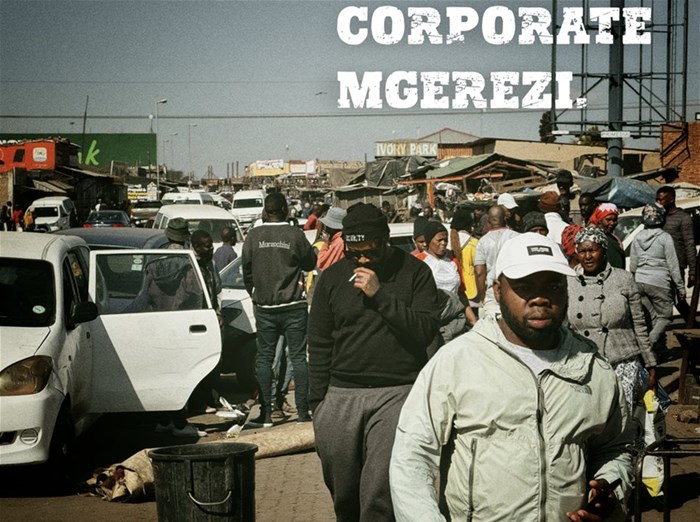
The answer is not to throw away the data. Relax. The dashboards can stay. They have feelings too you know, and finance still needs charts. The answer is to pair data with someone who can translate it through lived reality. That is the corporate mgerezi: the strategist who understands both the boardroom and the buying committee outside the spaza shop.
Source: Views from The Township by Kabelo Kale.
- Dignity over demographics: The Corporate Mgerezi understands that consumers are not driven by survival alone. Pride, family obligation, aspiration, risk, and respect all shape how money is spent.
- Real-time bullshit detection: When an idea looks clever in the workshop but would be laughed off the street, the Corporate Mgerezi can challenge it before the budget is burned and the apology statement is drafted.
- Trust over friction: Corporate systems often treat cash, queues, handovers, and human contact as inefficiencies. In many communities, those “inefficiencies” are proof, control, reassurance, and trust in physical form.
A reality check before the budget gets cremated

Source: Views from The Township by Kabelo Kale.
Before any campaign hits the market, every strategy team should sit down, breathe deeply, and ask five questions nobody in the room will enjoy:
- Are we solving a problem consumers actually named, or one we invented because it makes our product look useful?
- Is this behaviour aspirational, defensive, communal, practical, or all of the above?
- Did our insights come from real transactions in real environments, or from a focus group so sterile it could double as a clinic?
- Are we treating cash logistics and communal pooling as problems to remove, or trust systems to understand?
- Who in the room has enough lived proximity/empathy to challenge the comforting assumptions in this deck?
Diagnostic framework by Kabelo Kale — Views from The Townships.
So, who is the corporate mgerezi on your team?
The Corporate Mgerezi is the person who can sit in a Sandton strategy session at 10:00, read the cultural weaknesses in the deck by 10:07, and explain by 10:12 why the idea will land in Mlazi or die quietly in the WhatsApp comments.
They are not a mascot, translator, token, cultural ornament, or last-minute “please make this sound township” emergency contact. They are a serious strategist with commercial literacy, economic empathy, and lived proximity. They understand the boardroom and the buying committee around a kitchen table, in a taxi queue, or outside a spaza shop.
Their value is translation at the exact point where strategy usually breaks - turning raw data into human context, calling out nonsense early, and making sure the consumer’s wallet and dignity get the same respect as quarterly targets.
The future? Put a corporate mgerezi in the room before the room embarrasses itself
True market intelligence lives between analytical rigour and cultural empathy. If your business relies only on models built far from the behaviours they claim to explain, you are not doing strategy. You are doing corporate astrology with better fonts and a procurement-approved deck.
Table 2. The War Room Alignment Model — Embedding the Corporate Mgerezi alongside the conventional strategy stack.
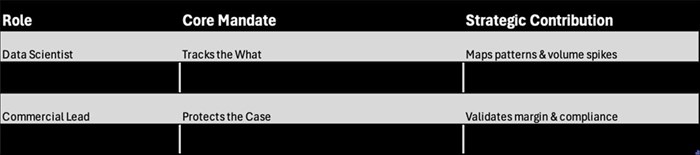
Model adapted from Kabelo Kale — Views from The Townships.
The challenge is simple: stop treating the majority market like an entry-level segment to decode from a distance. It is not a lab specimen. It is a vast, complex economy to respect, study, and serve with humility. This ecosystem does not need pity. It demands respect — and it can smell condescension from a very long distance.
The brands that win will not be the loudest, flashiest, or most over-produced. They will be the ones with deeper context, sharper listening, and enough internal courage to let someone in the room say the sentence everyone else is avoiding.
"This looks beautiful on the deck, but it will not survive the streets.”So here is the brutal question for your leadership team: do you have a Corporate Mgerezi with real authority in the room, or are you still hoping your dashboard can explain what the streets already know?